Scientists discover first new penguin species in more than 100 years
Genetic evidence has revealed a previously unknown gentoo penguin species on the remote Kerguelen Islands and shown that gentoos actually consist of four distinct species. The discovery also highlights a growing threat, as warming oceans could leave several island populations with little suitable ha Read more
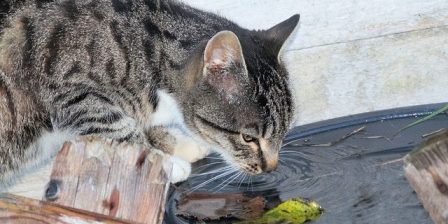
Scientists discover a hidden “ID card” in cat urine
Cats may identify one another through a surprisingly durable chemical “calling card” made from 13 unusual fatty acids in their urine. The compounds appear linked to mysterious fat droplets in the kidneys and may represent a scent-recognition system shared across the cat family. Read more
66-million-year-old feather in dinosaur poop may reveal why birds survived the asteroid
A feather discovered inside 66-million-year-old fossilized dinosaur poop may help explain why modern birds survived the asteroid catastrophe. The extinct bird it came from had more primitive insulating feathers, suggesting superior plumage may have helped the ancestors of living birds endure the dea Read more
The American “cheetah” wasn’t a cheetah at all
The extinct “American cheetah” was not really a cheetah at all, but a puma relative with an unexpectedly flexible lifestyle. Fossils from the Yukon suggest northern populations survived partly by eating fish, possibly including salmon, while southern cats hunted on land. Read more
Doctors saved this rare monkey from amputation. Months later, she gave birth
A critically endangered roloway monkey has given birth just months after surgeons performed an unusual operation that saved her foot from amputation. Her new daughter, Lagertha, is an important addition to a species believed to number fewer than 2,000 in the wild. Read more
A coffee-table-size scorpion roamed Earth before forests existed
A meter-long scorpion with massive pincers stalked ancient Britain 415 million years ago, long before forests and the better-known age of giant insects. Its surprising size and possible semi-aquatic lifestyle could reshape ideas about how early arthropods became giants. Read more
Fossil feet may be misleading scientists about human evolution
Wild monkeys in West Africa can climb vertical tree trunks using foot flexibility scientists did not realize they possessed. The discovery challenges a key assumption about what the last common ancestor of humans and chimpanzees looked like and how it moved. Read more
This 23-foot crocodylian may have ruled South America’s food chain
Miocene South America was packed with giant prey—and the predators hunting them were just as spectacular. Fossil bite marks suggest crocodylians, especially the enormous Purussaurus neivensis, were more important predators than mammals in this ancient tropical ecosystem. At around seven meters long, Read more
This school-bus-sized “terror croc” ate dinosaurs. Now it’s back
A massive crocodilian capable of attacking dinosaurs has been brought back to life as the first scientifically accurate mounted skeleton of Deinosuchus schwimmeri. The 31-foot replica at Georgia’s Tellus Science Museum was built from detailed fossil scans and more than 40 years of research by paleon Read more
This pet gecko could help scientists unlock the secrets of cancer
An unusual leopard gecko that naturally develops aggressive tumors may become an important new model for cancer research. Scientists found its tumors share key genetic changes with human cancers, offering a rare opportunity to study the disease as it develops naturally. Read more
This dinosaur fossil captures the final moments of a T. rex attack
A fossilized Edmontosaurus skull with a Tyrannosaurus tooth still embedded in its face has given scientists rare evidence of a dramatic predator-prey encounter. The discovery suggests the giant carnivore delivered an incredibly powerful face-to-face bite, offering new clues about how Tyrannosaurus h Read more
Scientists warn invasive Asian mantises are threatening Europe's wildlife
Two striking Asian praying mantis species that have rapidly spread across Europe have now been officially classified as invasive, raising new concerns about their impact on native wildlife. Boosted by climate change and urban environments, these fast-breeding predators are expanding northward, where Read more
Why South Africa’s leopards shrank to half their normal size
A hidden population of South African leopards has revealed a remarkable evolutionary story. Researchers analyzing entire leopard genomes discovered that the Cape Floristic Region’s leopards are not only much smaller than most African leopards, but also genetically distinct after being isolated for r Read more
More trees can mean fewer birds, new study reveals
Trees planted to protect farmland from wind may not be the biodiversity boost many assume. In Japan’s wetland farming landscapes, shelterbelts benefited some birds but sharply reduced grassland and wetland species that need open space. Researchers found grassland bird abundance dropped by more than Read more
T. rex took 40 years to reach full size, scientists find
Tyrannosaurus rex may have been a much slower grower than scientists realized. A new study of 17 tyrannosaur fossils found that the giant predator likely took about 40 years to reach its full size of roughly eight tons, extending previous estimates by 15 years. Read more
Mountain lions changed everything in this tiny California preserve
A surprising ecological makeover unfolded when mountain lions began frequenting a small preserve south of San Francisco. Deer activity dropped, plants recovered, and shifts among predators like coyotes, bobcats, and foxes followed. The study shows that powerful “trophic cascades” aren’t limited to r Read more
Lucy’s hunter revealed: Giant crocodile terrorized early human ancestors
A newly identified crocodile species nicknamed “Lucy’s hunter” prowled Ethiopia’s rivers when Lucy’s species walked the Earth more than 3 million years ago. The giant predator was likely the most dangerous animal in the ecosystem and may have regularly hunted early human relatives. Read more